




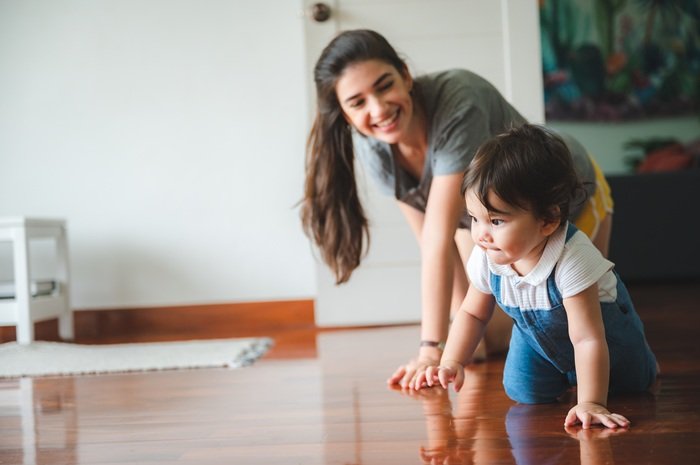
Before I had kids, I never gave much thought to the sharp corner on a coffee table, a dangling cord beside the window, or the fact that an entire cabinet of cleaning supplies was conveniently located under my kitchen sink at toddler level.
Then I became a mom. It’s been quite a while since I had a baby crawling around my house, but I still remember how quickly your perspective changes once that little person starts moving. Suddenly, you’re looking around your home from an entirely different point of view and realizing just how many things are within reach of curious little hands.
If you’re in that season of motherhood now, one of the easiest ways to start babyproofing is also one of the simplest: get down on the floor.
Really! Get on your hands and knees and take a look around from your baby's perspective. You might be surprised by what you notice down there: outlets, cords, tiny objects, sharp corners and all sorts of interesting things just waiting to be grabbed, pulled or put into a mouth.
Here are some of the big areas to check.
Babyproofing the Nursery
Your baby's room should be one of the safest spaces in the house, especially as your little one begins spending more time playing and sleeping there.
- Anchor dressers, bookshelves and other heavy furniture to the wall to help prevent tipping.
- Make sure the crib meets current safety standards.
- Keep pillows, blankets, stuffed animals and other soft items out of the crib.
- Use cordless window coverings.
- Cover accessible electrical outlets.
- Keep baby monitor cords, lamp cords and other electrical cords well out of reach.
And don't underestimate a determined baby or toddler. Once they discover pulling, climbing and opening drawers, furniture you never considered particularly interesting can suddenly become the most fascinating thing in the room.
Babyproofing the Kitchen
The kitchen is basically a wonderland for curious little ones. Doors! Drawers! Buttons! Containers! Unfortunately, plenty of those interesting things aren't safe for them to explore.
- Install locks or latches on cabinets and drawers containing knives, cleaning supplies, medications and other potentially dangerous items.
- Consider stove knob covers if your knobs are within reach.
- Turn pot and pan handles inward while cooking.
- Keep countertop appliances and their cords away from the edge.
- Watch for small objects that may fall onto the floor and become choking hazards.
This is another room that's worth inspecting regularly. The baby who couldn't reach a drawer last month may suddenly be standing on tiptoes trying to open it today.
Don't Forget the Bathroom
Water is one of the biggest safety concerns in a home with young children, so bathrooms deserve special attention.
- Keep the toilet lid closed and consider installing a toilet lock.
- Never leave a baby or young child unattended in the bathtub.
- Consider anti-scald devices for faucets.
- Set your water heater to 120 F or lower to help prevent burns.
- Keep medications, razors, toiletries and cleaning products secured and out of reach.
Even items that seem harmless to adults can become problematic when they're in the hands (or mouths) of little ones.
Making the Living Room Safer
This is often where babies get their first real taste of freedom. Once they're crawling, scooting or cruising around the furniture, they're going to investigate everything.
Start with the little things. Coins, batteries, small toys, remote controls and other everyday objects can pose choking or other safety hazards.
Then look at the bigger things.
- Secure TVs and other large electronics to help prevent tipping.
- Anchor furniture that could potentially tip over.
- Cover accessible electrical outlets.
- Use corner guards on particularly sharp furniture edges.
- Shorten, secure or hide electrical cords.
- Regularly scan floors, tables and sofa cushions for small objects.
And if you have older children in the house too, you already know how quickly LEGO pieces, doll accessories, beads, craft supplies and other tiny treasures can make their way into every room. What’s perfectly fine for an older child can be a major hazard for a baby.
Babyproofing Isn't One-and-Done
One thing I remember about this stage is that babyproofing never really felt finished.
A home that's perfectly safe for a 6-month-old who rolls around on the floor may need another round of attention when that same baby starts crawling. Then you'll reassess when they're pulling up, walking, climbing and figuring out how doors and cabinets work. Every new milestone seems to unlock a whole new level of the house!
So rather than thinking of babyproofing as something you check off your list once, make a habit of looking around your home every few months from your child's changing perspective.
Because if there's one thing babies are remarkably good at, it's finding the one thing you forgot to move.
